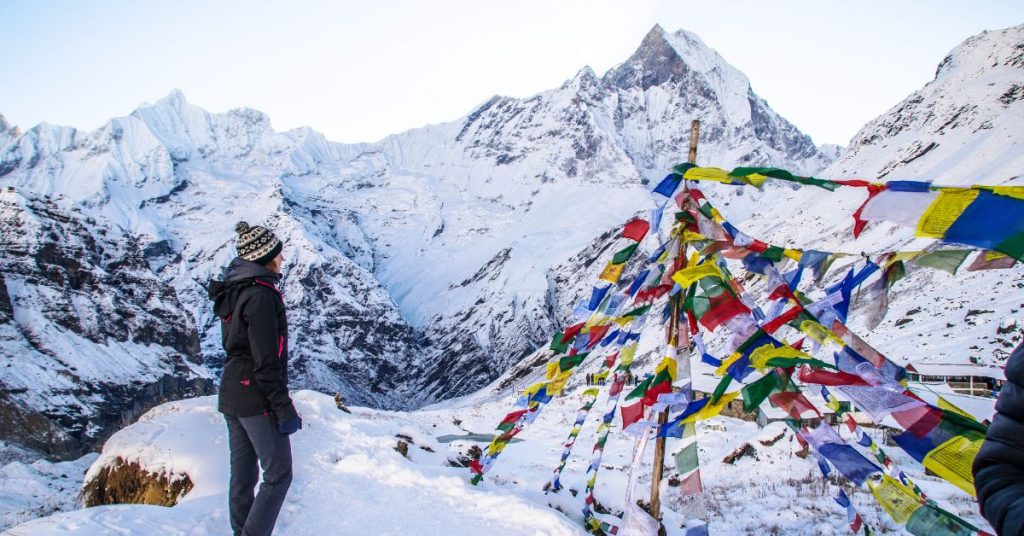
Annapurna Base Camp Trek
Season
March-May, September-November
Nearest City
Pokhara
Duration
7 Days
Difficulty
Moderate
US$ 500
per person
up to US$ 150 per person discount for groups.
Overview
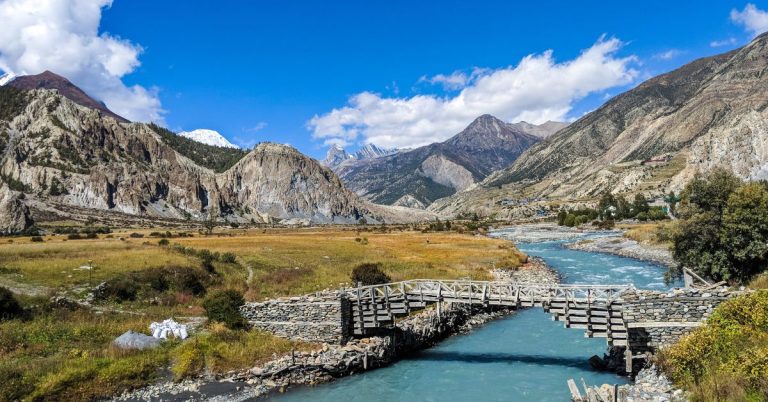
Embark on a captivating trek through the breathtaking landscapes of the Annapurna region in Nepal, and prepare to be enchanted by the mesmerizing beauty that unfolds before you. This exhilarating journey will take you on a transformative odyssey through a tapestry of diverse terrains, from charming villages nestled amidst terraced fields to lush forests teeming with wildlife, and from cascading waterfalls to awe-inspiring mountain vistas that touch the sky. Each day presents new adventures and opportunities to immerse yourself in the natural wonders of the Himalayas, forging a deep connection with the untamed wilderness that surrounds you.
As you traverse the winding trails, you’ll encounter the warm hospitality and rich cultural traditions of the local communities that call this region home. From the picturesque village of Ghandruk, with its stone houses and terracotta roofs, to the panoramic vistas of Annapurna Base Camp, where the towering peaks seem within reach, this trek promises an unforgettable experience that blends physical challenges with soul-stirring moments of reflection. Along the way, witness the ever-changing landscapes, from vibrant rhododendron forests ablaze with color to serene alpine meadows blanketed in wildflowers, creating a sensory symphony that resonates deep within your being.
This trek is not merely a physical endeavor but also an opportunity for personal growth and self-discovery. The mountains, with their eternal presence and indomitable spirit, inspire resilience and push you beyond your limits. They offer moments of solitude and reflection, inviting you to contemplate life’s mysteries and find solace in the simplicity of nature. And when you reach the Annapurna Base Camp, surrounded by a majestic amphitheater of peaks, you’ll stand in awe of the Earth’s raw beauty, humbled by its grandeur and reminded of your own place in the universe.
Prepare yourself for a trek that will test your physical endurance, ignite your spirit of adventure, and leave an indelible mark on your soul. The Annapurna region beckons, inviting you to embark on a journey of a lifetime where each step carries you closer to the heart of the Himalayas, and each moment reveals the boundless beauty that lies within and around you.
Major Highlights
Captivating landscapes
Cultural Immersion
Annapurna Base Camp
Wildlife & Biodiversity
Natural Hot Springs
Sense of Personal Achievement
Itinerary
The trek begins with a scenic drive from Pokhara to Ghandruk, a traditional Gurung village situated at an elevation of 1,940 meters. The journey itself offers glimpses of the stunning mountain ranges as you wind through the rugged terrain. Upon arrival in Ghandruk, take some time to explore the village, soak in the local culture, and marvel at the panoramic views of Annapurna South, Hiunchuli, and Machapuchare (Fishtail).
Wake up to the crisp mountain air and start the trek from Ghandruk to Chhomrong, a charming village nestled in the Modi Khola valley. The trail winds through terraced fields, dense forests, and suspension bridges, offering glimpses of cascading waterfalls and the surrounding peaks. As you ascend, you’ll be rewarded with spectacular vistas of Annapurna South and Machapuchare. Chhomrong itself is situated on a hilltop, providing breathtaking views of the Annapurna and Dhaulagiri mountain ranges.
Embark on a challenging day of trekking from Chhomrong to Himalaya. The trail takes you through lush rhododendron and bamboo forests, offering a chance to spot various species of flora and fauna along the way. As you ascend, the landscape changes, and you’ll find yourself surrounded by towering cliffs and cascading waterfalls. The trek to Himalaya is a test of endurance, but the jaw-dropping scenery and the sense of accomplishment make it all worthwhile.
Rise early and set out on a remarkable journey from Himalaya to Annapurna Base Camp (ABC). This is a day filled with anticipation as you gradually ascend to the base camp, situated at an altitude of 4,130 meters. The trail takes you through glacial moraines, and as you reach the base camp, you’ll be greeted by awe-inspiring panoramic views of Annapurna I, Annapurna South, Hiunchuli, and other snow-capped peaks. Spend time exploring the base camp, taking photographs, and immersing yourself in the serene grandeur of the Himalayas.
After a memorable stay at the base camp, begin the descent towards Bamboo. The trail retraces your steps, offering different perspectives and new angles of the surrounding mountains. As you make your way down, you’ll pass through Himalayan forests, where you might encounter wildlife like langurs, pheasants, and various bird species. Arrive at Bamboo, a peaceful village surrounded by dense vegetation, and relax as you prepare for the next leg of your adventure.
Continue your descent from Bamboo to Jhinu, where you’ll find natural hot springs. The trail leads you through beautiful terraced fields, charming villages, and peaceful forests. Take your time to enjoy the serene atmosphere and connect with nature. Once you arrive in Jhinu, soothe your tired muscles in the rejuvenating hot springs, surrounded by lush greenery and the symphony of nature.
On the final day of your trek, bid farewell to the mountains and embark on a scenic drive from Jhinu back to Pokhara. Reflect on the incredible journey you’ve undertaken and relish the memories of the stunning landscapes, cultural encounters, and personal triumphs that made this trek an experience of a lifetime. Return to Pokhara with a sense of fulfillment, carrying the spirit of the Himalayas within you.
This trek through the Annapurna region offers a remarkable blend of natural beauty, cultural immersion, and physical challenges. It is an opportunity to witness the grandeur of the Himalayas up close, forge connections with local communities, and create lasting memories in one of the most awe-inspiring regions of Nepal.
Things To Know
- Transportation to Ghandruk
- Meals (breakfast, lunch & dinner) provided during the trek
- Accommodation in lodges along the trekking route
- Experienced guide
- ACAP & TIMS permit
- Transportation from Jhinu to Pokhara
- Arrangement of emergency helicopter service (cost covered by your travel insurance)
- Nepal entry visa fee (obtainable upon arrival at Tribhuwan International Airport, Kathmandu)
- Compulsory travel insurance (to be arranged separately)
- Personal expenses, including costs for drinking water, hot and cold drinks, and bar bills
- Porters
- Additional charges for laundry, telephone usage, hot showers, and internet access
- Tips for the guide and porters
- Any expenses or services not specifically mentioned in the included section
The difficulty of the trek to Annapurna Base Camp can vary depending on factors such as individual fitness level, previous trekking experience, and the chosen itinerary. Overall, it is considered a moderately challenging trek. The trek involves a gradual ascent with some steep sections and uneven terrain. Altitude can also be a factor as the Annapurna Base Camp sits at an altitude of 4,130 meters (13,550 feet). Acclimatization and proper pacing are essential to minimize the risk of altitude-related issues.
While prior trekking experience is not mandatory, regular physical fitness preparation and endurance training are recommended to enhance your trekking experience and reduce fatigue. It’s advisable to engage in activities such as hiking, cardio exercises, and strength training before embarking on the trek.
To trek to Annapurna Base Camp, you will need to obtain two permits: the Annapurna Conservation Area Permit (ACAP) and the Trekker’s Information Management System (TIMS) card. These permits are necessary to ensure the conservation and management of the Annapurna region and to maintain accurate records of trekkers in the area.
The best time to go on an Annapurna Base Camp trek is during the pre-monsoon (spring) and post-monsoon (autumn) seasons, which offer the most favorable weather and trekking conditions. The specific months to consider are:
1. Spring Season (March to May): This is one of the most popular times to trek to Annapurna Base Camp. The weather during spring is generally mild and stable, with clear skies and comfortable temperatures. The rhododendron forests along the trail are in full bloom, creating a vibrant and picturesque setting.
2. Autumn Season (September to November): Another excellent time for the Annapurna Base Camp trek is during the autumn season. The weather is usually dry, with clear visibility and pleasant temperatures. The autumn months offer stunning views of the surrounding mountains, and the trails are generally less crowded compared to the spring season.
During these peak seasons, the trekking trails are well-defined, teahouses are open, and the overall infrastructure is fully operational. However, it’s important to note that these periods are also the busiest, and popular trekking routes may have a higher number of trekkers.
While the spring and autumn seasons are generally recommended, it’s important to consider personal preferences and factors such as weather, availability, and personal schedule when choosing the best time for your Annapurna Base Camp trek. It’s always a good idea to check the weather forecast and consult with local trekking agencies for the latest information and to plan your trek accordingly.
During the trek, you will be provided with modest and sanitary meals. It is recommended to opt for local cuisine, which is usually more hygienic than frozen or imported foods. Traditional Nepalese dishes like Dal Bhat (lentils and rice) are highly recommended as they provide the necessary carbohydrates and protein for trekking at high altitudes. Other options include Sherpa stew (Syakpa), seasonal vegetables, momo (dumplings), local cereals like barley, buckwheat, and millet, as well as noodles, sandwiches, and bakery products. It is advisable to avoid dairy and cheese products, alcoholic beverages, caffeinated drinks, and hot chocolates at higher altitudes.
Accommodation during the trek includes a range of options to suit different budgets. Teahouses and lodges are available along the route, offering comfortable amenities such as mattresses with cushions, electric blankets, hot and cold showers, and free Wi-Fi. The rooms are typically shared by two people and include basic furniture like a mattress, blanket, and pillow. If you prefer separate rooms, arrangements can be made accordingly.
- Trekking Boots: Sturdy and comfortable boots are essential for trekking in the Everest Region. Choose boots that provide good ankle support and have a durable sole to navigate various terrains.
- Sandals/Crocs: Having a pair of sandals or Crocs is useful for relaxing your feet in the evenings or during rest days. They are lightweight and easy to slip on and off.
- Few pairs of undergarments: Pack enough pairs of undergarments to last throughout your trek. Opt for moisture-wicking and quick-drying materials for comfort.
- High-quality down jacket and pant: The Everest Region can get cold, especially at higher altitudes. A high-quality down jacket and pant will provide insulation and keep you warm.
- Thermal wear: Thermal base layers are essential for layering and maintaining body heat. Pack both thermal tops and bottoms.
- T-shirts and trousers: Pack a few comfortable t-shirts and trousers for daily wear during the trek. Opt for lightweight and breathable materials.
- Trekking pole: A trekking pole can provide stability and support, especially during steep ascents and descents. It helps to reduce the strain on your legs and joints.
- A pair of gloves: Insulated and waterproof gloves are necessary to protect your hands from cold temperatures. They should provide dexterity for gripping trekking poles and other equipment.
- Woollen hat: A warm woollen hat or beanie is crucial for retaining heat and protecting your head from the cold.
- Sunglasses: Sunglasses with UV protection are essential to shield your eyes from the strong sunlight and glare at higher altitudes.
- Sunscreen: The sun’s rays are stronger at higher altitudes. Carry a high SPF sunscreen to protect your skin from sunburn.
- Water purification tablets: Clean drinking water is essential during the trek. Carry water purification tablets to treat water from local sources.
- Energy bars: Trekking in the Everest Region requires a lot of energy. Carry lightweight and high-energy snacks like energy bars to keep you fueled throughout the trek.
Have more questions? Talk with us
Other treks in Nepal
Looking for customized plan?
Contact us with the details and we will design customized trip tailored as per your requirement.